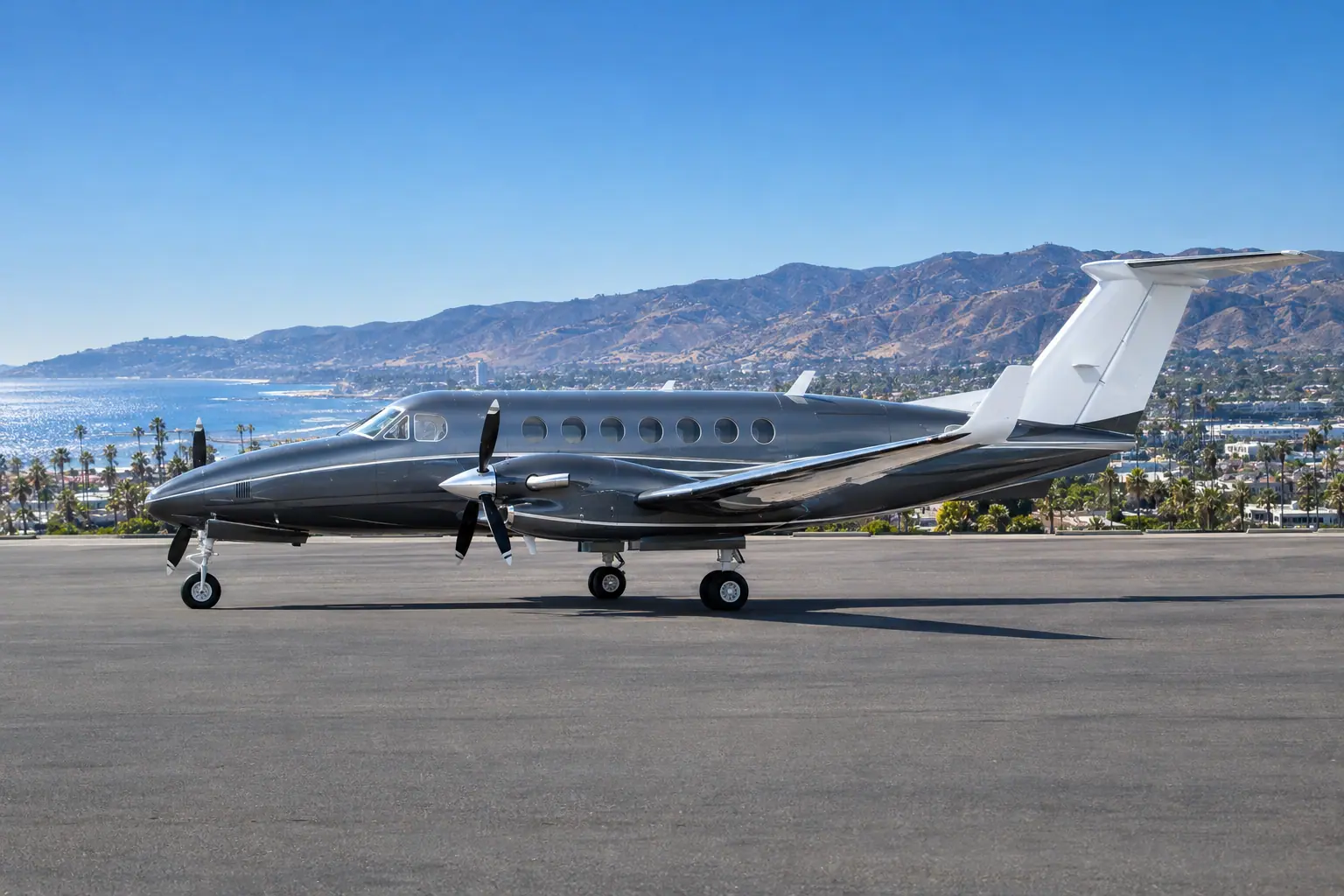
Private Jet Los Angeles to San Francisco
Private jet Los Angeles to San Francisco runs 279 nautical miles. A light jet makes it in 0h 59m, from about $4,000. That short hop reshapes the usual pricing logic.
- 321 statute miles
- 279 nm
- turboprop flight time
- 1h 17m
- single-way quote
- $3,000–$4,500
Los Angeles to San Francisco private jet pricing, by aircraft
A private jet flying Los Angeles to San Francisco covers 279 nautical miles in 1h 17m on a turboprop, quoted at $3,000–$4,500 one way.Five classes clear this route nonstop, from turboprops at 1h 17m to heavy jets at 0h 55m. The estimates below are per-leg ranges, not quotes: a broker prices your specific dates, aircraft and both airports at booking. Use the spread between classes as a budget guide, then ask for live numbers.
| Aircraft class | Flight time | One-way price est. | Notes |
|---|---|---|---|
| Turboprop | 1h 17m | $3,000–$4,500 | Best fit |
| Light jet | 0h 59m | $4,000–$6,000 | Nonstop |
| Midsize jet | 0h 58m | $5,000–$8,000 | Nonstop |
| Super-midsize jet | 0h 55m | $7,000–$10,000 | Nonstop |
| Heavy jet | 0h 55m | $9,500–$14,500 | Nonstop |
Prices are per aircraft, not per seat, and exclude federal excise tax and segment fees. Time covers taxi, climb and descent.
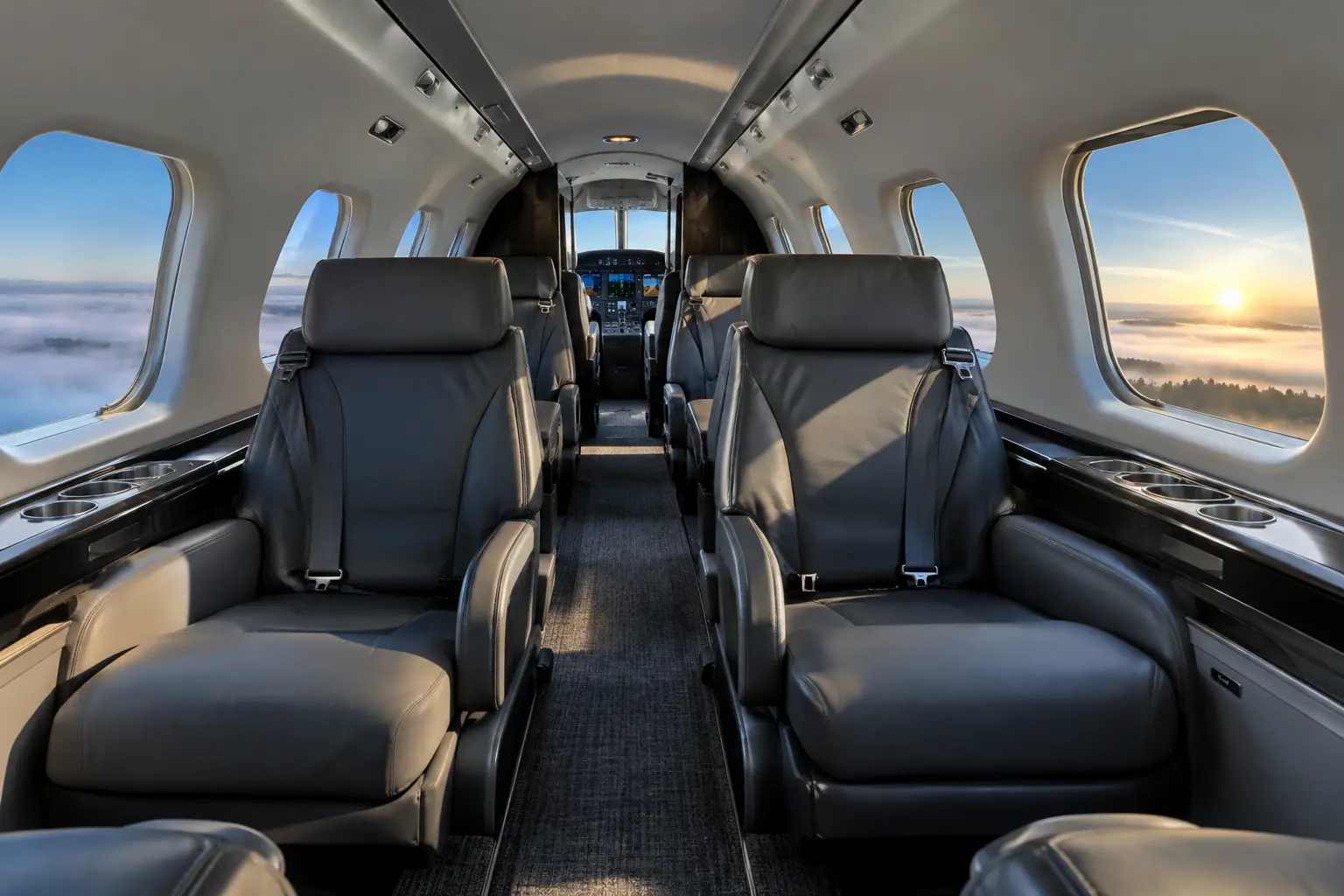
Why a turboprop fits this trip
The turboprop is the value pick on a 279 nm route because block time barely separates it from the jets: 1h 17m versus 0h 59m in a light jet, at estimates of $3,000 to $4,500. On this distance the climb and descent dominate, so the faster cruise of a jet buys about eighteen minutes. If your party is six to eight people with normal luggage, a King Air 350i or PC-12 NGX carries everyone comfortably and keeps the budget low.
The alternatives only pay off in specific cases. A light jet at $4,000 to $6,000 trims the flight to about an hour, and a midsize at $5,000 to $8,000 adds cabin room for groups that want space more than speed. Super-midsize and heavy jets cost $7,000 to $14,500 for a gain of a few minutes; book them for stand-up cabin comfort or a schedule that needs a particular aircraft, not for time saved.
Daher TBM 960
- 6 seats
- 330 kt cruise
- 1,730 nm range
Cabin 4 ft tall, 13 ft 3 in long. Baggage 32 cu ft.
Beechcraft King Air 350i
- 8 seats
- 312 kt cruise
- 1,800 nm range
Cabin 4 ft 9 in tall, 16 ft 8 in long. Baggage 55 cu ft.
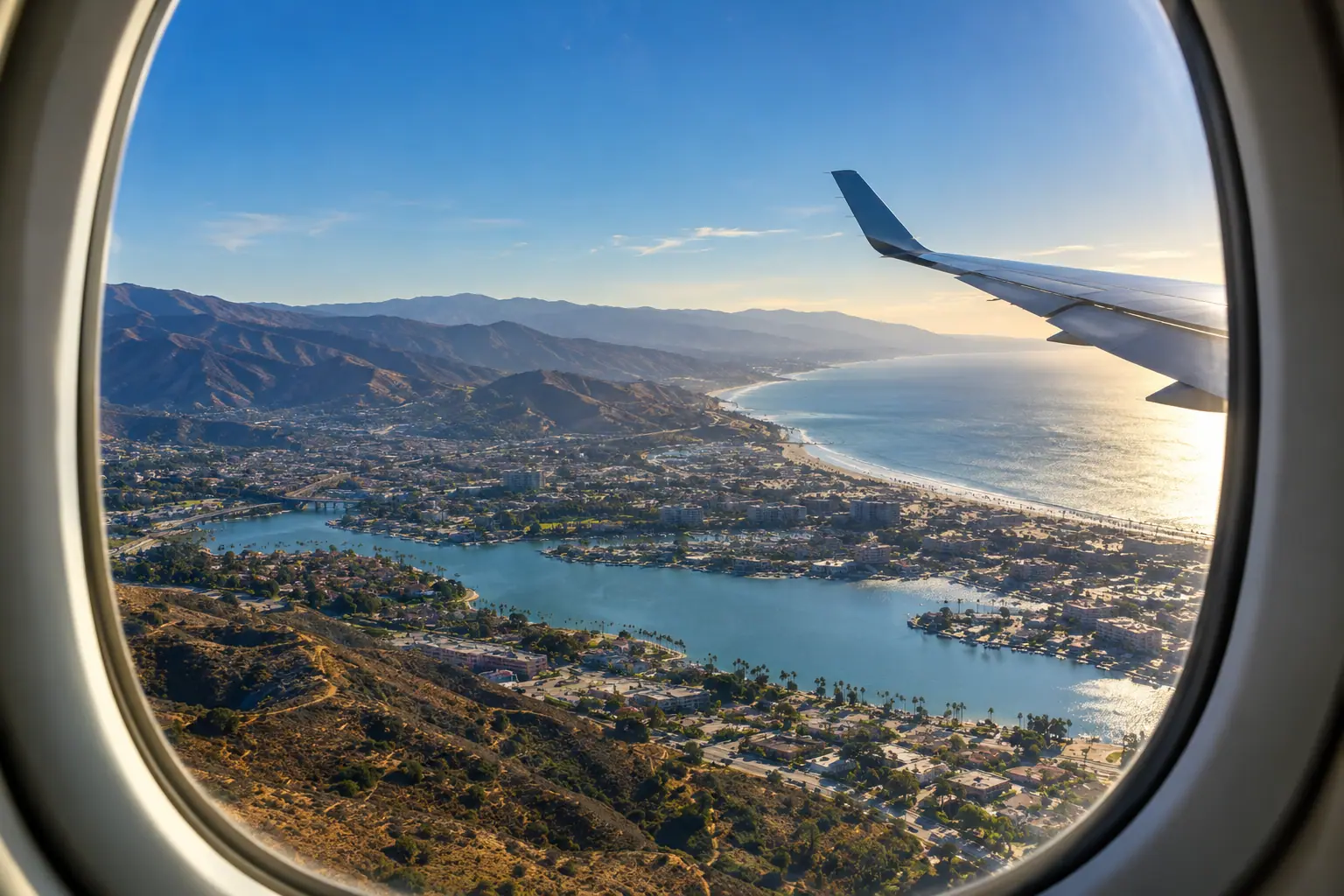
Leaving Los Angeles
Four airports serve the departure side, and Van Nuys (KVNY) is the usual staging point for this run, with 8,001 feet of runway and a straight shot up the Central Valley. Torrance's Zamperini Field has the shortest strip at 5,001 feet, which limits some heavier types. Charter brokers arrange the flight while FAA Part 135 operators hold operational control.
Which airport you pick matters less than traffic on the 405 and the 5. Allow real time to reach the field, and expect the FBO to want your tail number and passenger list before departure. On a route this short, ground time is the variable you actually control.
Arriving in San Francisco
San Francisco International (KSFO) and Oakland (KOAK) both take this traffic, with SFO's 11,870-foot runway handling any class on the list. Oakland sits across the bay and often suits travelers headed to the East Bay or downtown via the Bay Bridge. Landing at SFO or Oakland puts you minutes from the Financial District and the Embarcadero.
Fog is the local wild card. SFO's marine layer can slow arrivals in summer afternoons, so a morning slot is the safer bet for meetings. If your plans include Napa, Sonoma or Silicon Valley, say so when you book and the drop-off airport can be matched to the drive.
| Airport | Code | Runway |
|---|---|---|
| San Francisco International Airport | KSFO / SFO | 11,870 ft |
| Oakland San Francisco Bay Airport | KOAK / OAK | 10,520 ft |
| Van Nuys Airport | KVNY / VNY | 8,001 ft |
| Los Angeles International Airport | KLAX / LAX | 12,894 ft |
| Hollywood Burbank/Bob Hope Airport | KBUR / BUR | 6,886 ft |
| Zamperini Field | KTOA / TOA | 5,001 ft |
Private jet Los Angeles to San Francisco
Demand peaks on weekday mornings northbound and Thursday or Friday afternoons, when business travel and weekend trips overlap. Tech earnings weeks, major conferences at Moscone Center and the run-up to big Bay Area events tighten aircraft supply, so fares land at the top of the ranges above. Booking a week or more ahead on weekday mornings keeps the estimate near the low end, especially for the light jet and turboprop classes that fill first.
Same-day round trips are practical here because each leg is 0h 55m to 1h 17m of flying. If you want the aircraft to wait while you meet, expect holding charges and confirm them upfront. Otherwise, a return leg booked in advance is usually cleaner and cheaper than improvising one on the day. Return-leg pricing on this 321-mile route often depends on how far the aircraft must reposition, and a broker who sees both legs can often pair them with an aircraft already in the Bay Area.
When your dates fall in a known busy stretch, then booking two to three weeks out gives you more aircraft to choose from and keeps you out of the top of the range. When your schedule is flexible, then midweek midday departures are the least contested slots at both Van Nuys and SFO. The FAA Part 135 operator flying your trip sets the final schedule; the broker's job is to find the aircraft and terms that fit it.
Private jet routes similar to Los Angeles to San Francisco
These 6 private jet city pairs span 199 to 2,129 nautical miles, with single-way turboprop quotes from $2,000 to $30,000.
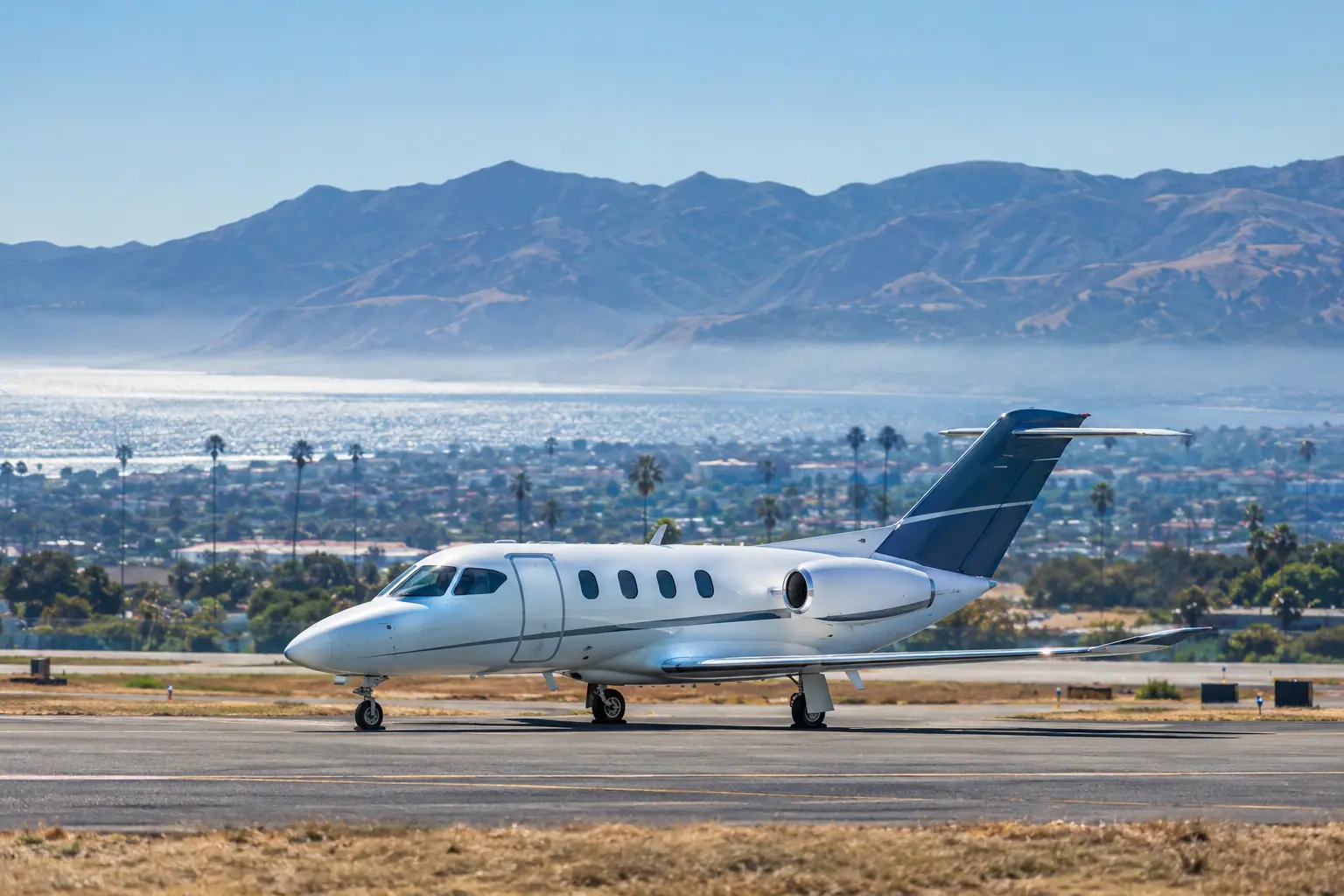
Questions about this route
How long is a private jet Los Angeles to San Francisco flight?
Block time runs from 0h 55m in a super-midsize or heavy jet up to 1h 17m in a turboprop, over 279 nautical miles. A light jet covers it in 0h 59m. Add taxi and climb-out at both ends, and plan roughly two hours door to door depending on your ground arrangements and traffic.
What does a private jet Los Angeles to San Francisco cost?
Planners see estimates of $3,000 to $4,500 for a turboprop and $4,000 to $6,000 for a light jet, rising to $9,500 to $14,500 for a heavy jet, per leg. Those are 2026 estimates, not quotes. Final pricing depends on aircraft, date, both airports and any waiting time you request.
Which aircraft class fits this route best?
The turboprop fits a 279 nm hop because its 1h 17m block time is close to a light jet's 0h 59m. The King Air 350i seats 8 and the PC-12 NGX seats 6, both with 1,800 nm of range, so neither is working hard. You give up a few minutes and save on the estimate.
Can I fly private jet Los Angeles to San Francisco and back in one day?
Yes. With 0h 55m to 1h 17m of flying each way, a same-day round trip is realistic. Two turboprop legs would estimate near $6,000 to $9,000 total. If the aircraft waits during your meetings, holding charges apply, so confirm them before you commit. Booking the return in advance beats sourcing one on the day.
Which airports do these flights use at each end?
Departures typically use Van Nuys (8,001-foot runway), LAX (12,894 feet), Burbank (6,886 feet) or Torrance (5,001 feet). Arrivals land at San Francisco International (11,870 feet) or Oakland (10,520 feet). Your choice should follow where you live and where your first meeting sits, not runway length alone.
Who is responsible for operating the flight?
The flight is flown by an FAA Part 135 operator that holds operational control, including crew, maintenance and dispatch. A broker arranges the trip as your agent under DOT Part 295 rules and does not own the aircraft. Ask for the operator's name and certificate before you book, and confirm insurance details in writing.